
Foodsystems.tech maps game-changing innovations for a sustainable food system. Part of the Bold Bets for the Future of Food initiative, it showcases cutting edge developments in plant nutrition, sustainable livestock, and next-generation crops. Designed for funders, researchers, policymakers, and innovators, it aims to foster informed decision-making, strategic investments, and collaboration toward a more sustainable and equitable food future.
ABOUT
The Website


The Team
Powered by:


Foodsystems.tech is the product of a collaborative initiative by Clim-Eat, a think-and-do tank working to accelerate the transition to sustainable food systems, and the Bezos Earth Fund, which supports innovative solutions to tackle climate change and safeguard nature, including initiatives to create more sustainable agricultural systems.
Our team behind the platform brings together decades of expertise, and includes Philip K. Thornton (h-index: 111) and Bruce M. Campbell (h-index: 91), both leading voices in food security, climate change, and sustainable agriculture. Their deep knowledge is supported by a cross-disciplinary team, ensuring a comprehensive and systems-level perspective. This diverse collaboration underpins the rigorous, evidence-based approach that ensures Foodsystems.tech showcases work at the forefront of food system innovation.

Philip Thornton
Research and Innovation Strategist
Clim-Eat

Andy Jarvis
Director of Future of Food
the Bezos Earth Fund

Bruce Campbell
Chief Innovation Strategist
Clim-Eat

Leanne Zeppenfeldt
Collaboration and Learning Architect
Clim-Eat

Dhanush Dinesh
Chief Climate Catalyst
Clim-Eat

Senni Alho
Innovations Officer
Clim-Eat

Saskia Doherty
Projects Trainee
Clim-Eat

Annebelle Rombach
Innovations Researcher
Clim-Eat
Philip Thornton
Research and Innovation Strategist, Clim-Eat
As Research and Innovation Strategist for Clim-Eat, Philip combines horizon scanning and futures thinking with the latest research on food and climate, helping to identify new opportunities for our impact partners. He will focus on the environmental, social and economic impacts of technological innovation in food systems and the enablers of transformative change in food systems.
Before he became part of the founding Clim-Eat team, Philip was the Flagship Leader for Policies and Priorities for Climate Smart Agriculture for the CGIAR Research Program on Climate Change, Agriculture and Food Security (CCAFS), and a Principal Scientist at the International Livestock Research Institute (ILRI) in Nairobi, Kenya. He has 38 years’ experience in agricultural research for development. He is a member of several journal editorial boards and a lead author for Working Group II of the IPCC’s AR6 assessment round, to be published in 2022. Philip is an Honorary Professor in the School of Geosciences, The University of Edinburgh, and listed as the 39th most influential climate change scientist on Reuters Hot List.
Andy Jarvis
Director of Future of Food, the Bezos Earth Fund
Andy Jarvis has worked for over 20 years in research for development to support the delivery of food security and environmental sustainability in the food system. His research has focused on data-driven policy analysis on a variety of topics from agrobiodiversity conservation to climate impacts and adaptation. Andy joined the Bezos Earth Fund from the Alliance of Bioversity International and CIAT, a CGIAR center, as the Associate Director General for Research Strategy and Innovation where he oversaw research that spans from crop breeding and genetics to landscape management, climate adaptation and mitigation through to dietary shifts and consumer behavior.
Andy holds a PhD in Geography from King’s College London, and is located in Cali, Colombia.
Bruce Campbell
Chief Innovation Strategist, Clim-Eat
As Chief Innovation Strategist, Bruce will bring crucial thought leadership to fulfil our ambition of catalysing a transformation in food systems under climate change. Bruce has four decades of experience working with rural development, agriculture, climate change, rural livelihoods and forestry in 30+ low and middle income countries. He previously directed the CGIAR Research Program on Climate Change, Agriculture and Food Security (CCAFS), which under his leadership reached 60 million people with its ideas, 19 milllion farmers with climate-smart agriculture, informed over USD 3.5 billion in investments and resulted in over 70 policy wins in just the last two years.
Previously based in Zimbabwe, Indonesia and Australia, Bruce has worked extensively in agricultural and forestry research for development. His work has spanned social-ecological systems, the link between poverty alleviation and forest goods and services, and Aboriginal natural resource management, among other topics.
He has served as Director of the Forests and Livelihoods Program at CIFOR – Center for International Forestry Research, inaugural Director of the Institute of Environmental Studies at the University of Zimbabwe, and inaugural Director of the School for Environmental Studies at the Charles Darwin University in Darwin. Bruce has a PhD in Ecology from the Universiteit Utrecht, and has published over 180 peer-reviewed articles and more than a dozen books.
Leanne Zeppenfeldt
Collaboration and Learning Architect, Clim-Eat
Leanne is the driving force behind Clim-Eat’s institutional knowledge development and partnership initiatives, focusing on innovation and the future of food systems. With her expertise in both organizational and technological innovation, Leanne is strongly embedded in her field. She seeks to accelerate the transition to more sustainable and equitable food systems through research and collaboration with various stakeholders. Currently, she focuses on understanding the role of innovation in the dynamics of inertia and change within food systems.
Leanne previously worked on communications and knowledge management at the CGIAR Research Program on Climate Change, Agriculture and Food Security (CCAFS). She has studied the Master International Development at Wageningen University & Research, specializing in evaluation, knowledge management, and innovation at the Knowledge, Technology and Innovation group. She holds a Bachelor’s degree (Hons) in Governance, Economics and Development from Leiden University College. She is passionate about exploring creative ways to look at today’s challenges around food systems, climate change and development, including rethinking how we see and approach learning & failure.
Dhanush Dinesh
Chief Climate Catalyst, Clim-Eat
Meet Dhanush, a fearless visionary determined to shake up our food systems and take on climate change. He refuses to settle for the status quo, which is why he’s assembled a top-notch team at Clim-Eat. Together, they’re on a mission to disrupt the industry, challenge norms, and create a more sustainable future for all.
Prior to founding Clim-Eat, Dhanush worked as Head of Partnerships and Reach of CGIAR Research Program on Climate Change, Agriculture and Food Security (CCAFS) to scale up Climate-Smart Agriculture. He is a Trustee of Plan Vivo Foundation and a Visiting Researcher at the University of Leeds. His previous work experience includes roles within the private sector, NGOs, and the UN system, in China, India, Thailand, and the UK. He has worked on a range of issues including forestry, environmental policy, climate change adaptation, and advocacy, at the national, regional, and global levels.
Dhanush has an interdisciplinary academic background, combining an MBA from PSG Institute of Management and an MSc in Carbon management from the University of Edinburgh and has a PhD in Environmental Governance from the Universiteit Utrecht.
Senni Alho
Innovations Officer, Clim-Eat
Meet Senni, our Innovations Officer, who brings her passion and skills to support Clim-Eat’s project on food system innovations. Senni holds a Master of Science degree in Economics and Business Administration from Aalto University, where she focused on interdisciplinary sustainability, international development, and industrial ecosystem research. She is passionate about applying systems and design thinking methods to approach wicked problems.
Senni has experience in management consultancy, where she conducted primary and secondary research and translated findings into client-relevant insights. Additionally, Senni has nurtured her activism by volunteering with environmental NGOs and currently serves as a youth representative on WWF Finland’s Board of Trustees.
Saskia Doherty
Projects Trainee, Clim-Eat
Saskia joins Clim-Eat directly from the Dutch Embassy in Kenya. What a match! There, she was part of the Food Security, Climate, and Water team, deepening her expertise in food systems and climate challenges on the local level.
She holds an MSc in Sustainable Land Management from Wageningen University, further supplemented by her background in Earth, Energy, and Sustainability from Leiden University College.
Saskia is passionate about the social and ecological aspects of agricultural systems and the role of land-use change in climate change. In addition, Saskia has a knack for developing data-driven solutions. With her versatile scientific expertise and unique experience, Saskia is set to drive Clim-Eat’s projects forward.
Annebelle Rombach
Innovations Researcher, Clim-Eat
As Innovations Researcher Annebelle predominantly works as a research assistant to horizon scanning for highly impactful and disruptive technical innovations to catalyze the transition to a sustainable and just food system. Meanwhile, she is also dedicated to learning about how behavioral science can improve the science communication of organizations such as clim-EAT and cultivate action in our society.
Annebelle previously completed her Bachelor’s degree (Hons) Earth, Energy & Sustainability with a minor in Psychology at Leiden University College, during which she specialized in quantitative and methodological subjects, with a focus on environmental sciences. She is especially interested in how we can use our understanding of the intersection between the natural world and technology as an advantage in protecting and enhancing environmental systems and services.

The Process
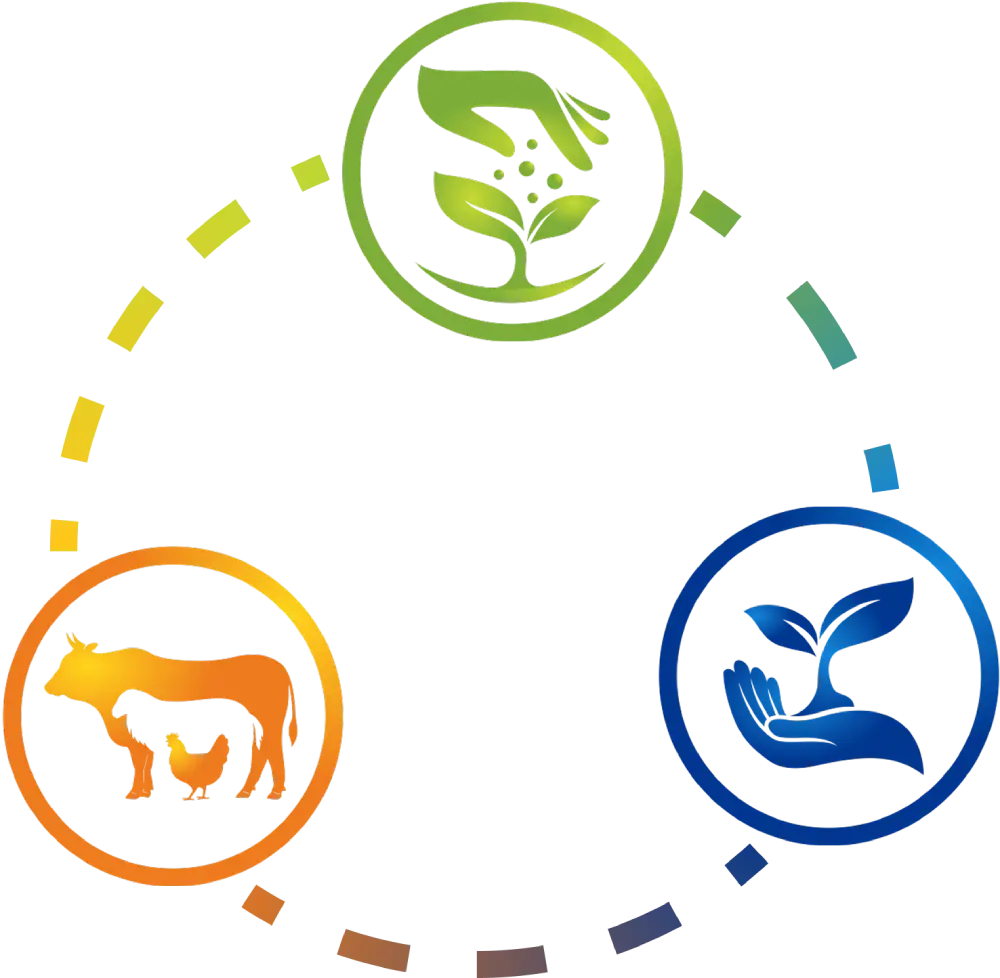
Our team continually searches for emerging innovations, projects, and key actors shaping the future of food. With a global geographical lens, we look for bold bets with the potential to drive game-changing impact over the next 20–30 years—whether still in early development or already moving toward adoption. We’ve chosen to start with innovations in plant nutrition, sustainable livestock, and next-generation crops, given their critical role in reducing agricultural emissions, particularly from fertilizer and livestock systems. While these domains are our current focus, foodsystems.tech will continue to evolve, with the potential to expand into new areas. Through literature reviews, expert interviews, and engagement with industry leaders, we assess each innovation based on its relevance to the domains, timeframe, and potential for impact—ensuring that foodsystems.tech highlights the most promising solutions shaping the future of food.

The Expert Panel
A majority of the innovations featured on Foodsystems.tech have undergone an external peer review by scientists and industry professionals. We are also open to feedback and continuously strive to improve the platform, ensuring it remains a trusted resource for decision-makers in the food systems space.
We would especially like to express our gratitude to:
Alan Duncan, University of Edinburgh and International Livestock Research Institute
Bianca Bertaccini, World Economic Forum
Claire Lynch, Cornell Food Systems & Global Change
Cody Kugler, Cornell Food Systems & Global Change
Daniel Mason d’Croz, Cornell Food Systems & Global Change
Ermias Kebreab, UC Davis
Federico Rona, World Economic Forum
Gijs Herpers, Qarbotech
Heather Zornetzer, GlocoLearning and IFSS Portal
Joanna Gordon, The Global Agrifood Tech Alliance
John Ireland, NTP Technologies
Ken Giller, Wageningen University
Mario Herrero, Cornell Food Systems & Global Change
Roseline Remans, GlocoLearning and Bioversity International
Rune Ingels, N2 Applied
Simon Cook, Murdoch University
Sonja Vermeulen, Chatham House

Get Involved
Help keep Foodsystems.tech up-to-date by sharing updates on innovations, such as new research, pilots, or startups. By contributing these insights, you’ll ensure the platform highlights the latest breakthroughs and continues to showcase cutting-edge developments in food systems.
If you have expertise in food systems or sustainability, consider joining our expert panel to review and provide feedback on innovation descriptions. Your input will help ensure the accuracy and relevance of the innovations featured, supporting the platform’s mission to drive impactful change.
We welcome discussions on food systems topics. If you have ideas, want to explore potential collaborations, or simply wish to share your thoughts, contact our team. We value your input and are eager to engage in conversations that can shape the future of food systems.